- Hip pain
Hip pain
Hip pain can have many causes. Hip symptoms can arise both acutely and gradually. Although most people only suffer from their hip at a later age, pain in the hip can also occur at a younger age. In this article you can read how the hip is put together and which conditions can cause hip pain.
Anatomy of the hip
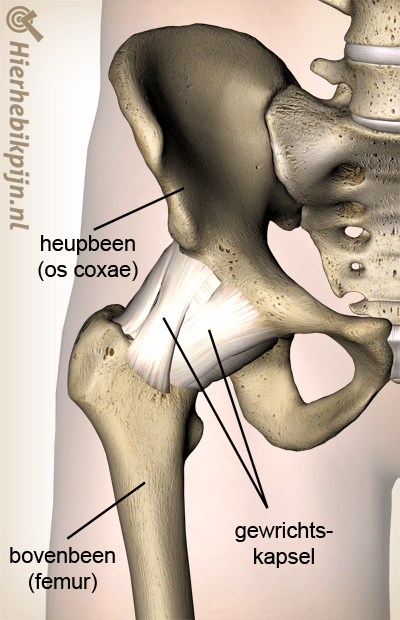
Two bones come together in the hip joint: the hip bone (also called the os coxae) and the thighbone (the 'femur'). The hip bone is part of the pelvis. On both sides of the hip bone there is a socket. The femoral head fits into this socket and forms a ball-and-socket joint with the hip bone of the pelvis.
Cartilage
Both the socket and the head are covered with a layer of cartilage. Cartilage is very smooth and ensures that the head and socket glide well over each other. Wear or damage to the cartilage can cause pain in the hip because both bony parts then no longer move well over each other. We call this hip osteoarthritis.
Ligaments and capsules
The head and socket of the hip joint are held together by the joint capsule. This consists of strong ligaments that ensure the joint cannot dislocate. Damage to the capsules and ligaments can result in hip pain.
Muscles and tendons
The movements in the hip joint are provided by the hip muscles. These muscles attach via tendons to the bone of the pelvis and the bone of the thigh or lower leg. The position of a muscle and its attachment to the bones determines which movements the muscle can produce in the joint. Overloaded muscles and tendons can cause pain in or around the hip joint.
Location of the pain in the hip
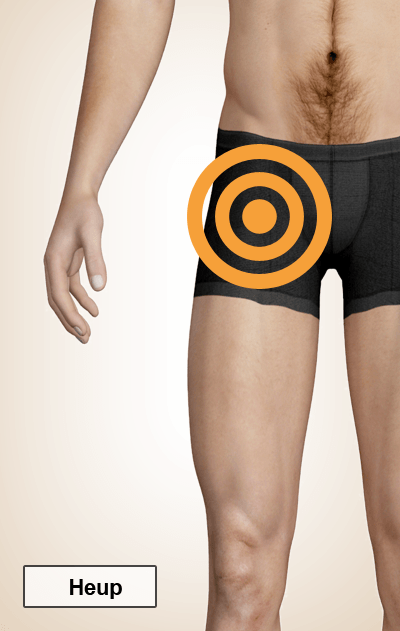
A problem with muscles and tendons is usually felt in the region where the muscle or tendon is located. However, when the problem is in the hip joint itself, the pain is often felt in the groin. Because of this, groin and hip symptoms are often confused. When there is groin pain, the hip should therefore always be examined as well.
Check your symptoms
Because pain in the hip can have different causes, we advise you to do the online physiotherapy check. This is a test for, among other things, hip pain. First indicate where you feel the pain. You will then be asked a number of questions about your symptoms so that we can make a good first assessment. The result shows the condition(s) you may be dealing with. If you wish, you can then share the result with a physiotherapist near you.
Hip conditions
The overview below gives insight into conditions that can cause pain in or around the hip. Each article provides extensive information about the underlying anatomy, the symptoms and the treatment.
Heup
- Adduction-related groin pain
- Bruising
- Calvé-Legg-Perthes disease
- Fibromyalgia
- Greater trochanter pain syndrome
- Hip fracture
- Hip impingement
- Iliopsoas syndrome
- Joint mouse
- Osteoarthrosis of the hip
- Osteochondritis dissecans
- Pain in the abdominal muscles
- Pelvic instability
- Rectus femoris tendinopathy
- Rheumatoid arthritis
- Slipped capital femoral epiphysis
- Transient synovitis