- Pain in the lower leg
Pain in the lower leg
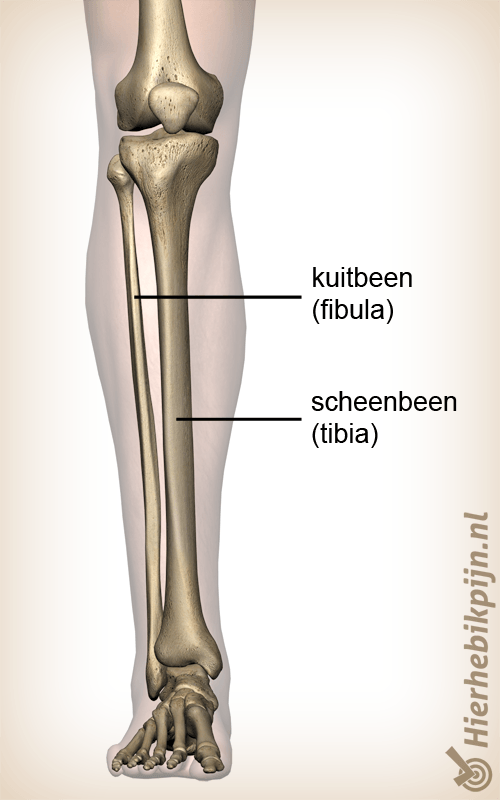
The lower leg is located between the knee and the ankle. It consists of two bones: the shinbone (the tibia) and the fibula. In addition, the lower leg has 12 muscles that provide movement and stability in the adjacent joints. Pain in the lower leg can arise both acutely and gradually.
Anatomy & injuries of the lower leg
The shinbone is located at the front of the lower leg. At the top, the bone is broad and flat, forming a plateau. This plateau is called the tibial plateau and is part of the knee joint.
The fibula is on the outside in relation to the shinbone. The fibula and shinbone are connected by connective tissue (the syndesmosis). At the bottom of the lower leg, the shinbone and fibula together form the upper part of the ankle joint.
Muscles and compartments
The lower leg muscles can be divided into three groups: one muscle group at the front, one on the outside, and one at the back. The three muscle groups are separated by connective tissue into compartments. The rear muscle group is also divided into two groups by connective tissue; superficial and deeper muscles. This ultimately results in four compartments.
Injuries
Overuse of the muscles of the lower leg can cause the muscles to swell, which leads to increased pressure within a compartment that can result in pain. This can occur acutely or chronically. This is also referred to as compartment syndrome.
Another overuse injury of the lower leg is the medial tibial stress syndrome (MTSS), also known as shin splints. This injury is located at the front of the lower leg along the inner edge of the shinbone.
In addition, pain in the lower leg can also occur acutely, in the most extreme case due to a fracture of the shinbone or fibula. But an acute muscle tear such as the calf muscle tear can also lead to unpleasant pain symptoms.
Check the pain in your lower leg
To get an understanding of the origin of the pain in your lower leg, we advise you to do the online physiotherapy check. First indicate where the pain in your lower leg is located. Then you can answer a number of questions about your complaints, after which we compare your symptoms with the most common conditions in physiotherapy.
The result will show the condition or injury you may be dealing with. For professional help, you can make an appointment at a physiotherapy practice near you.
Injuries and conditions of the lower leg
Pain in the lower leg can have various causes. Below is an overview of the most common conditions and injuries that cause pain in the lower leg.