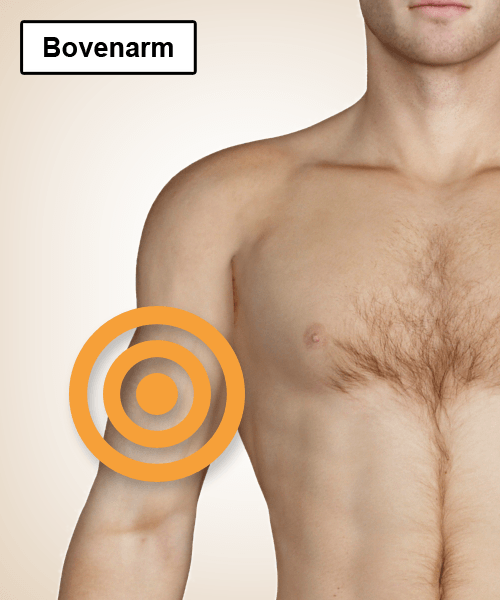
- Pain in the upper arm
Pain in the upper arm
The upper arm is the part of the body between the elbow and the shoulder. When pain occurs in this region, it is often attributed to problems with the biceps or triceps muscles, but that is not always the case. Pain felt in the upper arm may also originate from the shoulder, elbow or even the neck.
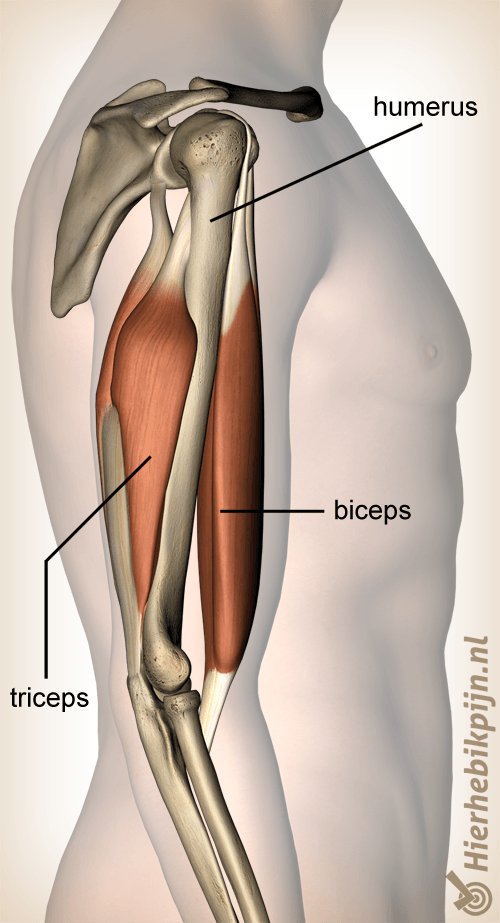
Anatomy of the upper arm
The upper arm consists of one bone and two major muscle groups. The bone, called the humerus, serves as an attachment for the biceps and triceps muscle groups. The biceps are also known as the muscles used to show off one’s strength.
As the name suggests, these muscle groups consist of two (bi-) and three (tri-) separate muscles, respectively. In addition, several important nerves and blood vessels run through the upper arm, providing control, sensation, and nourishment for the entire arm.
Pain symptoms
For non-acute pain in the upper arm, it is often necessary to determine where the underlying cause lies. Pain in the shoulder is often felt in the upper arm. The long tendon of the biceps even runs through the shoulder capsule and attaches to the shoulder, which may explain why the pain is felt in the upper arm.
Furthermore, pain in the upper arm may also stem from the neck, especially when nerves that extend into the arm are involved. If a nerve in the neck is irritated or pinched, this can cause pain in the upper arm.
Acute injuries to the upper arm may include a fracture or muscle tear of the biceps or triceps. A fracture mainly results from an accident or fall, while a tear often occurs during sudden strain while lifting a heavy load.
Muscles and tendons can also become overworked. Muscle soreness is a common complaint among athletes. Muscle pain in the upper arm is often seen in fitness training, where specific exercises for the biceps and triceps can sometimes lead to overuse.
Symptoms
Common symptoms include:
- A tight band-like feeling around the upper arm. Pain that is hard to pinpoint or moves around.
- Tightness.
- Tingling.
- Loss of strength.
Tingling or weakness may point to a problem involving nerves and/or blood vessels.
Check your upper arm symptoms
It is important to identify the cause of pain in the upper arm and take appropriate action. For orientation, you can do the online physiotherapy check, in which your upper arm pain is compared to a wide range of known physiotherapy complaints and injuries.
For a detailed examination, you can visit a qualified physiotherapist near you. The physiotherapist can determine the cause of the pain and treat it using physiotherapeutic techniques and targeted exercises.
Conditions
The following conditions relate to the upper arm. In the shoulder article, you will find an overview of shoulder conditions and injuries that may also cause pain in the upper arm.