- Physical complaints
- Bursitis
Bursitis
A bursa is a fluid-filled cushion located around joints. When a bursa is inflamed, it can swell and become painful. We then speak of bursitis.
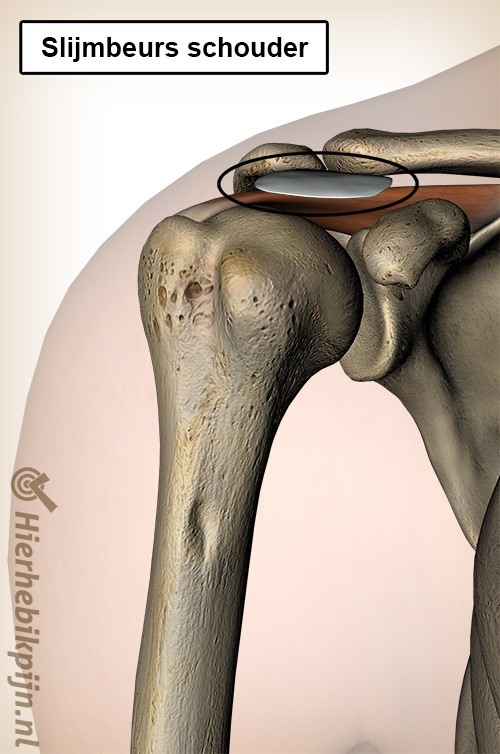
A bursitis can cause pain in different parts of the body. There are bursae in the hip, knee, ankle, shoulder, and elbow, among others.
What is bursitis?
The bursa is a fluid-filled cushion that lies within the joint capsule or just outside it. The bursa serves to protect the joint, provides shock absorption during movements, and prevents friction between tendons and bone. In medical terms, it is called a bursitis; "bursa" means bursa, and "-itis" is Latin for inflammation.
A bursitis is a reaction of the bursa to overuse, a bacterial infection, or trauma. The bursa, a small sac or cushion filled with synovial fluid, becomes irritated, causing local swelling and tenderness. In addition, the skin around the inflamed bursa may feel warm and appear red.
What are the symptoms of bursitis?
Bursitis is generally recognised by characteristic signs of inflammation such as (pressure) pain, warmth, redness, limitation of movement, and swelling. Due to the location of the bursa, severe swelling can cause pressure (compression) on other tissue such as muscles and tendons. This further limits movement and makes it more painful.
How does a bursitis arise?
The causes of bursitis are divided into two groups: acute and chronic causes.
In acute bursitis, there is usually a direct hit that irritates the bursa. Another possibility is a one-off overuse.
A chronic bursitis usually develops due to prolonged or repeated overuse. Examples include one-sided movements during work or sport such as swimming. A prolonged underuse also disturbs the ratio between loading and load capacity, for example, due to illness or an inactive lifestyle.
In addition, there are a number of risk factors that increase the chance of bursitis:
- Older age, due to the decrease in the quality of the bursa as age increases.
- The presence of an underlying condition such as rheumatoid arthritis, gout, or osteoarthritis.
- Poor training build-up.
- Bacterial infection; in rare cases, a bursitis occurs as a result of a bacterium that enters the bursa via the skin. This can occur, for example, after a wound from a fall or a bite.
Where does bursitis occur most often?
A number of joints are particularly vulnerable to bursitis, namely the shoulders, hips, elbows, and knees. In a bursitis of the elbow, the term student's elbow is often used. This has to do with prolongued leaning on the elbow while studying.
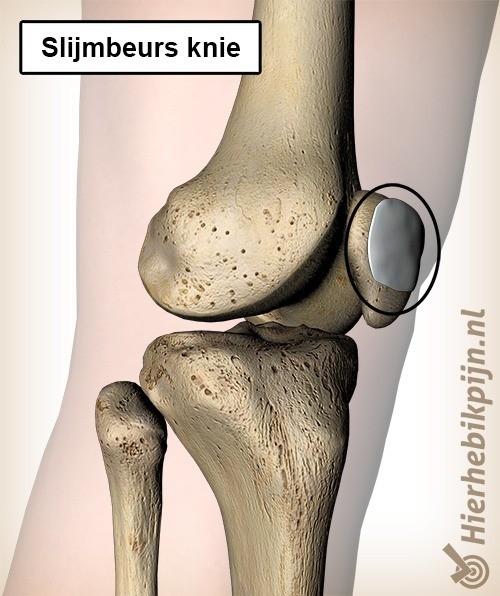
In a bursitis of the knee, the colloquial term housemaid's knee is often used; this refers to supporting weight on the knees while scrubbing the floor.
What is the treatment for bursitis?
Bursitis is treated by the doctor or the physiotherapist. In bursitis without bacterial infection, treatment usually consists of rest and waiting for the bursa to heal. In bursitis with bacterial infection, antibiotics are prescribed.
Below is more information about the different bursitis conditions per body region.
Want to know more?
Contact your GP or physiotherapist for more information.