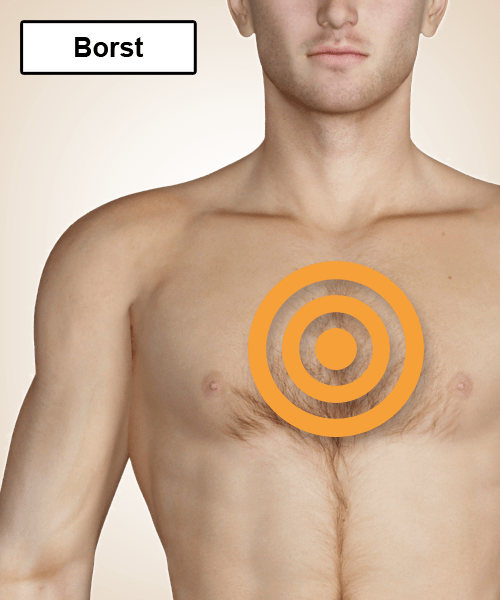
- Pain in the chest
Pain in the chest
Pain or pressure on the chest can result from a heart problem. However, such symptoms can also originate from other muscles, the ribs, or the lungs. The advice is: in case of doubt, always consult your GP immediately.
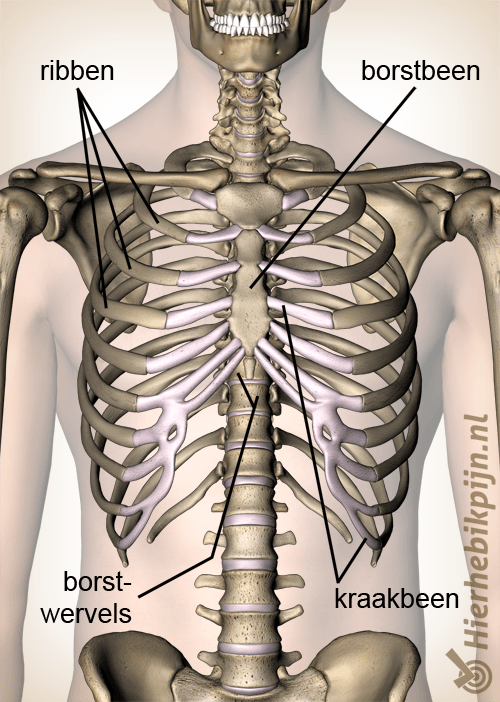
Anatomy of the chest
The chest consists of the sternum with twelve ribs on each side, which are connected at the back to the thoracic spine. Between the ribs are the intercostal muscles. These help with breathing by lifting the ribs, thereby enlarging the chest cavity.
The pectoralis major covers the upper ribs at the front of the chest. At the top, these are bordered by the clavicle. The pectoralis muscle ensures that the shoulder rotates inward and moves. It also helps with breathing and pulls the shoulder girdle forward.
Inside the chest are the heart and lungs. Thanks to the cage structure formed by the sternum, ribs, and thoracic spine, the heart and lungs are well protected from external impact.
Heart, lungs or another cause?
Differentiating between heart problems, lung problems, or another issue that causes chest pain is not always easy. We try to make a general distinction below.
Chest pain originating from the heart
Heart-related symptoms may be present when there is pressure or pain on the left side of the chest. If the pain radiates to the arm and the symptoms worsen with exertion or changes in heart rate, suspicion of a heart problem increases.
Chest pain originating from the lungs
The lungs can also cause chest pain. A lung problem is suspected when there is pressing pain over a large area of the chest, with symptoms depending on breathing or physical exertion.
Non-heart or lung-related pain
Besides heart- and lung-related pain, chest pain can also have other causes. The symptoms can appear either acutely or gradually. Common conditions we might consider include rib fractures, bruised ribs, joint dysfunction, or problems with one of the muscles of the chest.
Rib problems can arise as a result of an accident or fall, but this is not always the case. Sneezing can also lead to rib pain. Coughing, sneezing and deep breathing can be especially painful when the ribs are affected.
Pain not originating from the heart or lungs is often movement-dependent, meaning that the pain generally occurs with movements we make, such as bending, stretching, or twisting the upper body. Certain arm movements can also cause pain.
Check your symptoms
In case of doubt, always consult your GP immediately. A good assessment can quickly be made over the phone to determine whether urgent help is necessary. If no emergency care is needed, you can do the online physiotherapy check. You then answer a few questions about your symptoms, after which we compare them with the most common conditions and injuries within physiotherapy.
If necessary, you can then make an appointment at a physiotherapy practice for professional advice and treatment.
Conditions
Below you can read more about various conditions and injuries that cause chest pain.