
- Treatment methods
- Brace
- Knee brace
Knee brace
A knee brace protects the knee against excessive movements. A knee brace can be used for prevention or for the treatment of knee injury. It is a myth that a brace makes muscles 'lazy'.
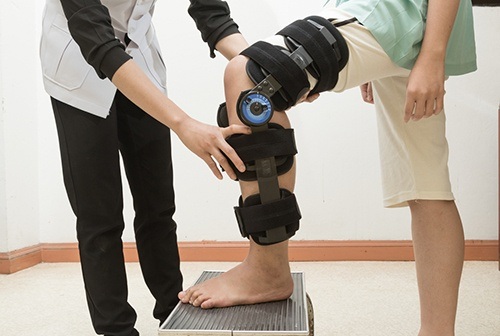
Knee brace for prevention
A knee brace is often used to prevent knee injury. Usually there has already been a previous knee injury. A knee with osteoarthritis can also be protected by a knee brace. This makes it possible to continue sports or work.
Knee brace as treatment for knee injury
A knee brace is only used as treatment for injury to the medial collateral ligament. This is the only correct application. Otherwise a knee brace is not used for injury treatment. It can, however, be used to postpone an operation after, for example, an anterior cruciate ligament rupture. When an ACL is not operated on, a brace can also be part of treatment, but then to prevent other knee injuries due to the resulting instability.
Types of knee braces
There are many different types of knee braces, from an elastic sleeve to a fully customised brace. A brace is usually recommended to prevent new knee injury. People with knee osteoarthritis or knee instability benefit from a knee brace. It allows them to continue to play sports and/or work.
A brace prevents a large proportion of sideways and extreme rotational movements in the knee joint. It remains possible to bend and straighten the knee. It is known that movement is good for the body and for joints. Even with osteoarthritis, a joint should keep moving. This remains possible with a brace.
An elastic sleeve does not prevent extreme movements but does provide compression. This can help against fluid retention. The compression also creates a feeling of stability and confidence, thereby reducing pain. Often such a sleeve is also a reminder for people to be a bit careful. In this way they avoid extreme forces on the knee.
Important with a knee brace
For a knee brace it is very important that it fits well. The thigh is always thicker than the lower leg. This can cause a knee brace to slip down.
A knee brace of the correct size is therefore important. It should clamp firmly around the thigh and lower leg. But if the brace is too tight, other problems can arise, such as cold feet or tingling in the foot. It is also important that the right movement is limited. This is often about sideways movements in the knee.
Ask a physiotherapist for advice on which brace suits you best.
Related topics