
- Physical complaints
- Bursitis
- Knee bursitis
Knee bursitis
The bursa of the knee is a closed fluid-filled sac located in front of the kneecap. The bursa acts as a cushion to prevent joint damage and reduces friction between bones, muscles and tendons. When the fluid-filled sac becomes inflamed, it is called bursitis.
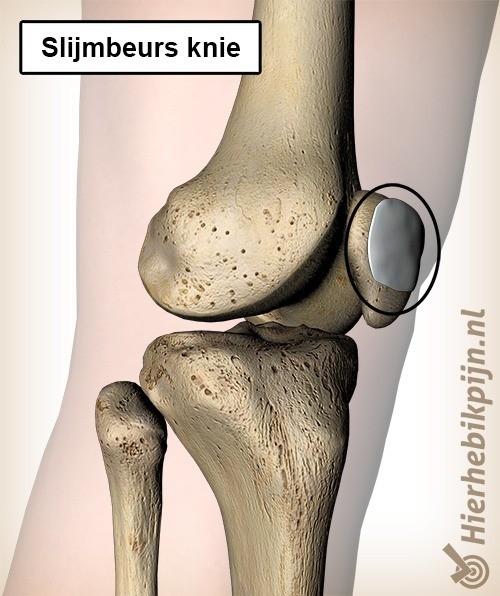
The medical term for the bursa of the knee is bursitis prepatellaris; in everyday language it is also called a 'housemaid's knee'.
How does the bursa of the knee become inflamed?
Although the bursa acts as a cushion, it is not designed for prolonged loading. The most common causes of an irritated bursa are therefore activities in which one sits or supports weight on the knees, such as during praying. Sports in which one falls on the knees - think of judo or wrestling - also increase the risk of a bursitis.
What are the characteristics of a knee bursitis?
The characteristics of a bursitis of the knee are quite easy to recognise. At the front of the knee, there is almost always a swelling. This swelling can feel warm and painful and look red. As a result of the swelling, it may also be more difficult to bend the knee.
How is a knee bursitis treated?
A bursitis of the knee generally heals on its own. However, it is important to take sufficient rest and reduce pressure on the knee. In some cases, medicines are prescribed, in which the inflammatory symptoms are treated with anti-inflammatories such as naproxen or diclofenac.
How do I prevent a knee bursitis?
Ensure there is not too much or too long pressure on the knees. If you regularly work or pray on your knees, it is advisable to change position regularly. If you are at risk of a bursitis due to work or sport, it is wise to wear knee pads and thus reduce pressure on the knees.
Do the self-check
Do the self-check and find out whether you have a knee bursitis. Answer a number of questions about your knee complaints and then view the result.
Related topics